
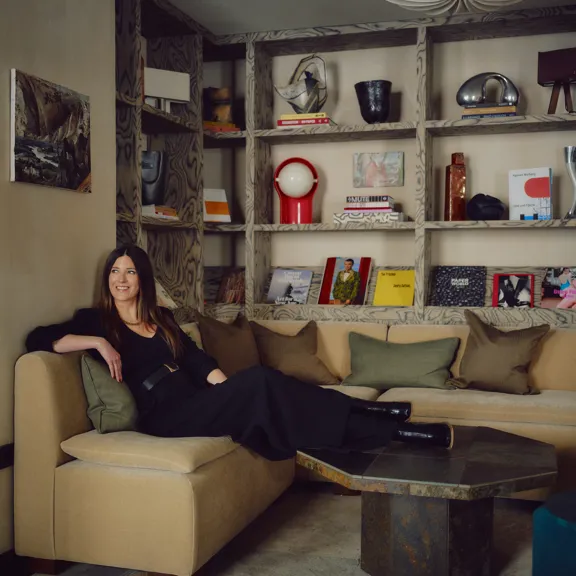
We sat down with award-winning interior designer Rachael Gowdridge to chat colour, character and designing The Dean Berlin.
For as long as she can remember, interior designer Rachael Gowdridge has been obsessed with the tiniest details. “I always wanted to be a detective, which is completely different to interior design. I think it’s about unravelling a solution to something”. As it turns out, the two disciplines aren’t so different. This desire to get under the surface goes some way towards explaining her approach to design, which is characterful, intricately layered and intimate, with a subtle but distinct sense of humour carried throughout. With 14 years' experience in the high-end luxury interiors market, Rachael’s career has brought her to celebrated practices and companies, and in 2021 she took the leap and opened her own studio.
Her latest case to crack? A Berlin building with a past, a neighbourhood full of soft character, and lampshades with more to them than meets the eye.
When designing for the first Dean hotel outside Ireland, Rachael brought her considered sensibility to Berlin in spades. “We like to approach projects holistically. We look at the framework of a building, so the story, the history, the neighbourhood. What’s the narrative of the whole space, what’s its story so far?” Charlottenburg is the softer side of Berlin, a neighbourhood known for its elegant architecture, historic charm and a distinct feeling of harmony that runs through. This is largely thanks to the original urban planning strategy way back when, a thoughtful balance of refined buildings and natural light, leafy streets leading to beautiful open spaces. Bearing in mind Rachael’s consideration for design that brings the outside in, this came about through good old fashioned on-the-ground experience.
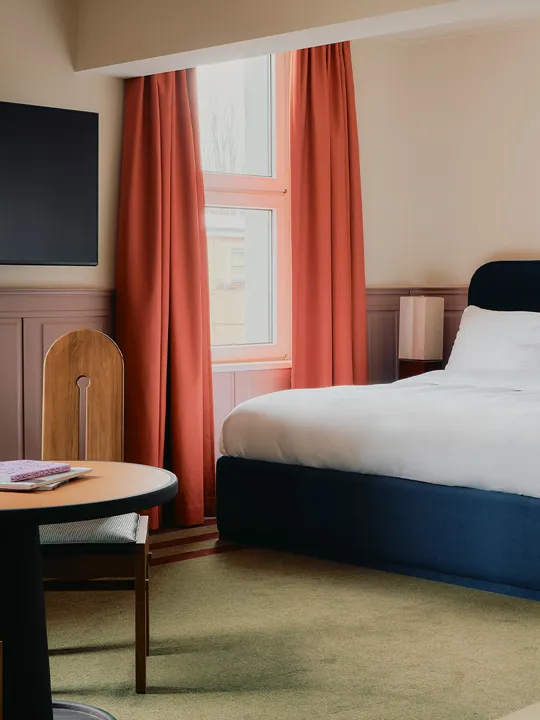
“When we first went to Berlin and walked around the neighbourhood, one thing that really struck us was the contrast between colours in the buildings. We loved this as a concept, so one of our design pillars for the project became chromatic contrast, where you see colours that maybe shouldn’t work, but then you bring them together in the right balance and they end up looking and feeling so great. You can see this really clearly in the rooms, for example the entrance lobby of each room is painted a beautiful deep colour on the walls and ceiling, so when you walk in you feel a gorgeous welcoming effect as soon as you open the door. It should feel cocooning, like being hugged.”
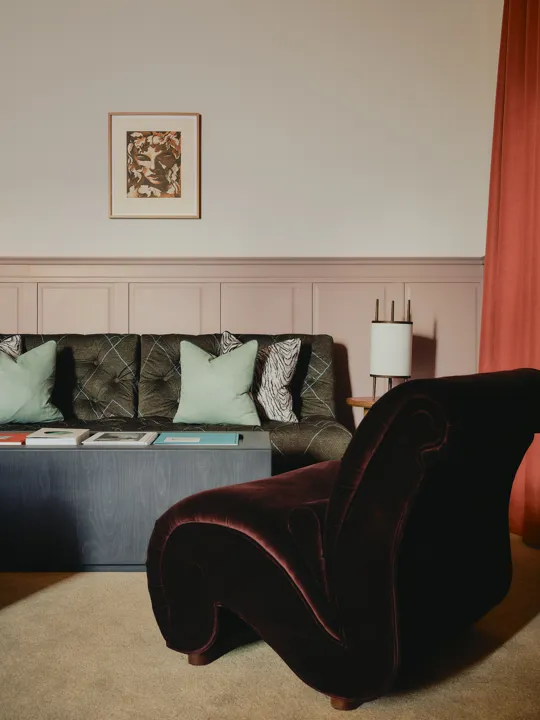
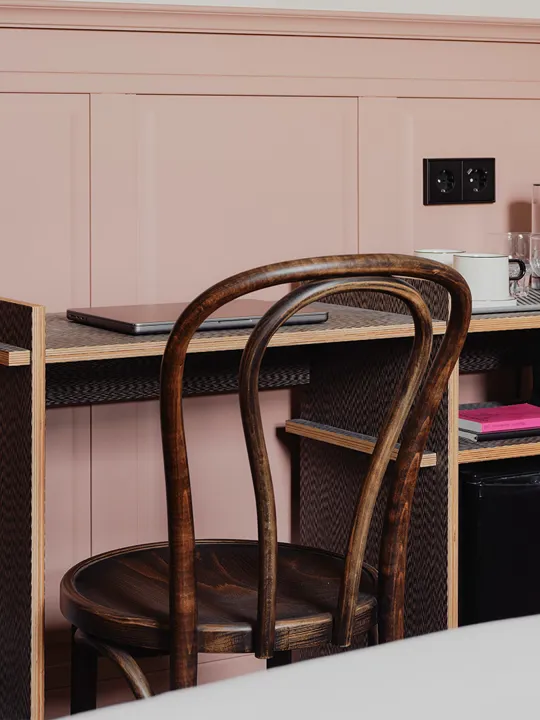
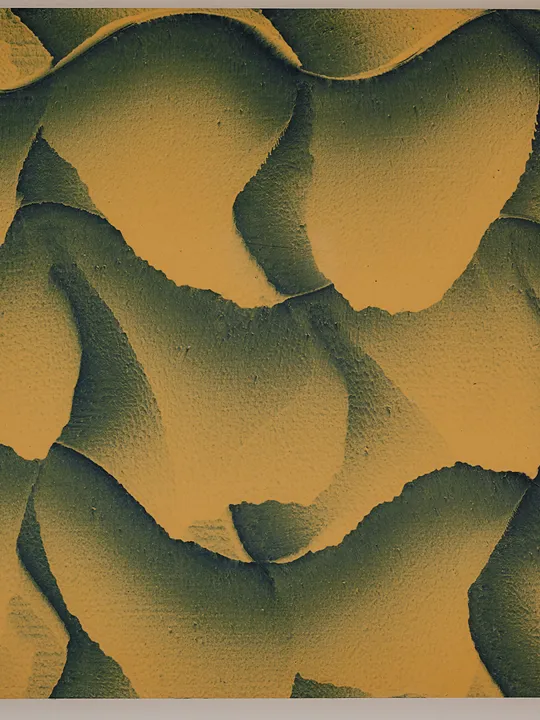
As with all Dean hotels, interior design goes hand in hand with art curation. Rachael’s work complements the efforts of art curator Thom Oosterhof, who brings local culture to the walls with the work of artists including Fiete Stolte, Kanta Kimura and Xia Peng. Rachael noted “it’s nice to work with someone with such enthusiasm for emerging artists. No two rooms are the same, every room has a unique piece of art related to Berlin which creates such a lovely narrative. Thom’s done such a brilliant job of bringing the city’s emerging artists into one place.”
Appreciating design means recognising that nothing can be perfect, and that’s what make things perfect. “When it came to designing The Dean Berlin, the building itself had been through lots of different hands. It was residential, post-war it was an office, then it was a hotel before this. This was a building that had gone through a real evolution, and we wanted to look back and not shy away from what it’s been before. With this design, we haven’t tried to hide its intricacies. We’ve accepted them and harmonised them, so everything sings together.”
So far, so (very) comfortable. But when it comes to Berlin, there’s always something extra, something unexpected. Charlottenburg might be a little less gritty than other parts of the city, but don’t let that make you think there are no surprises in store.
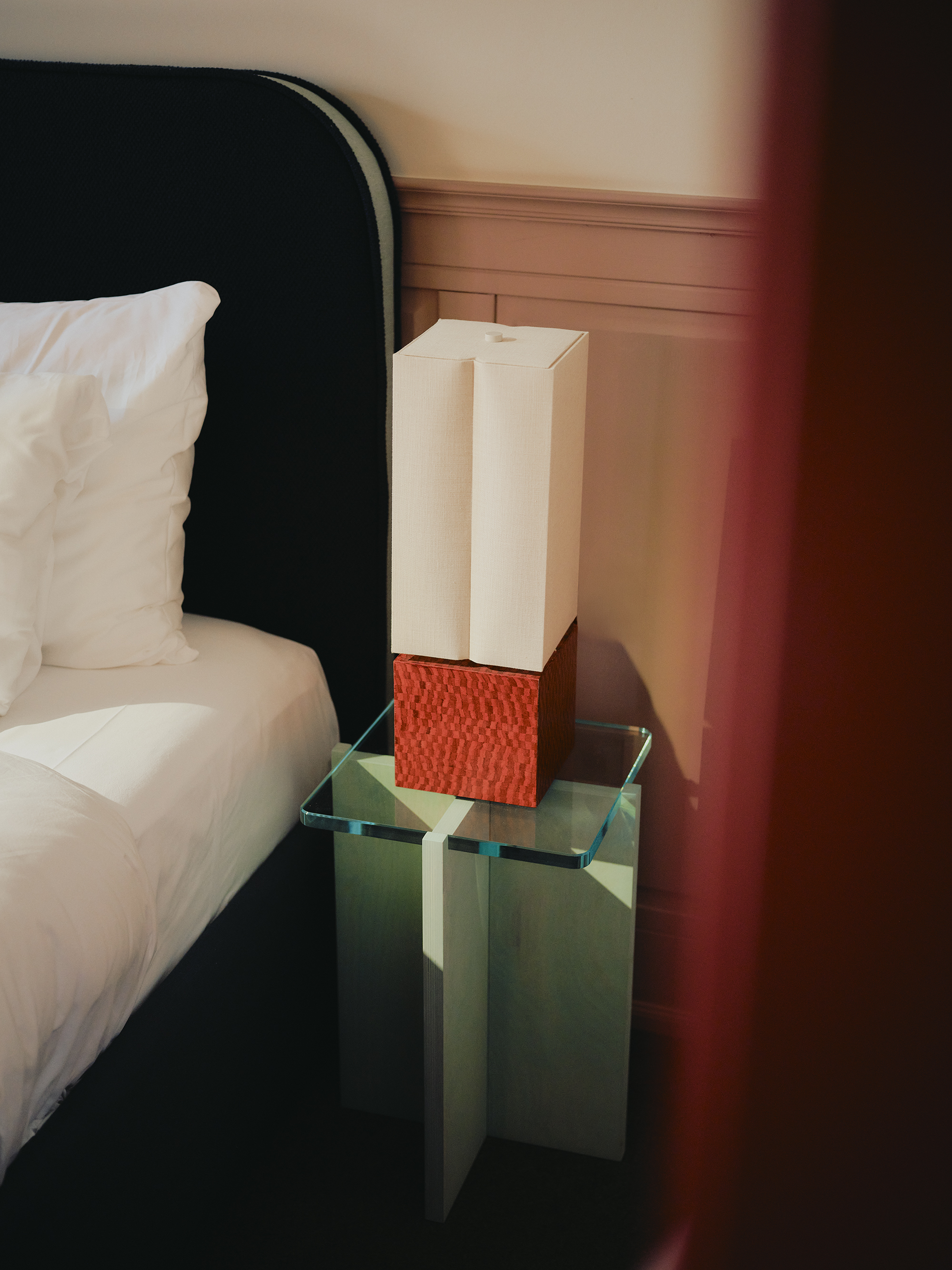
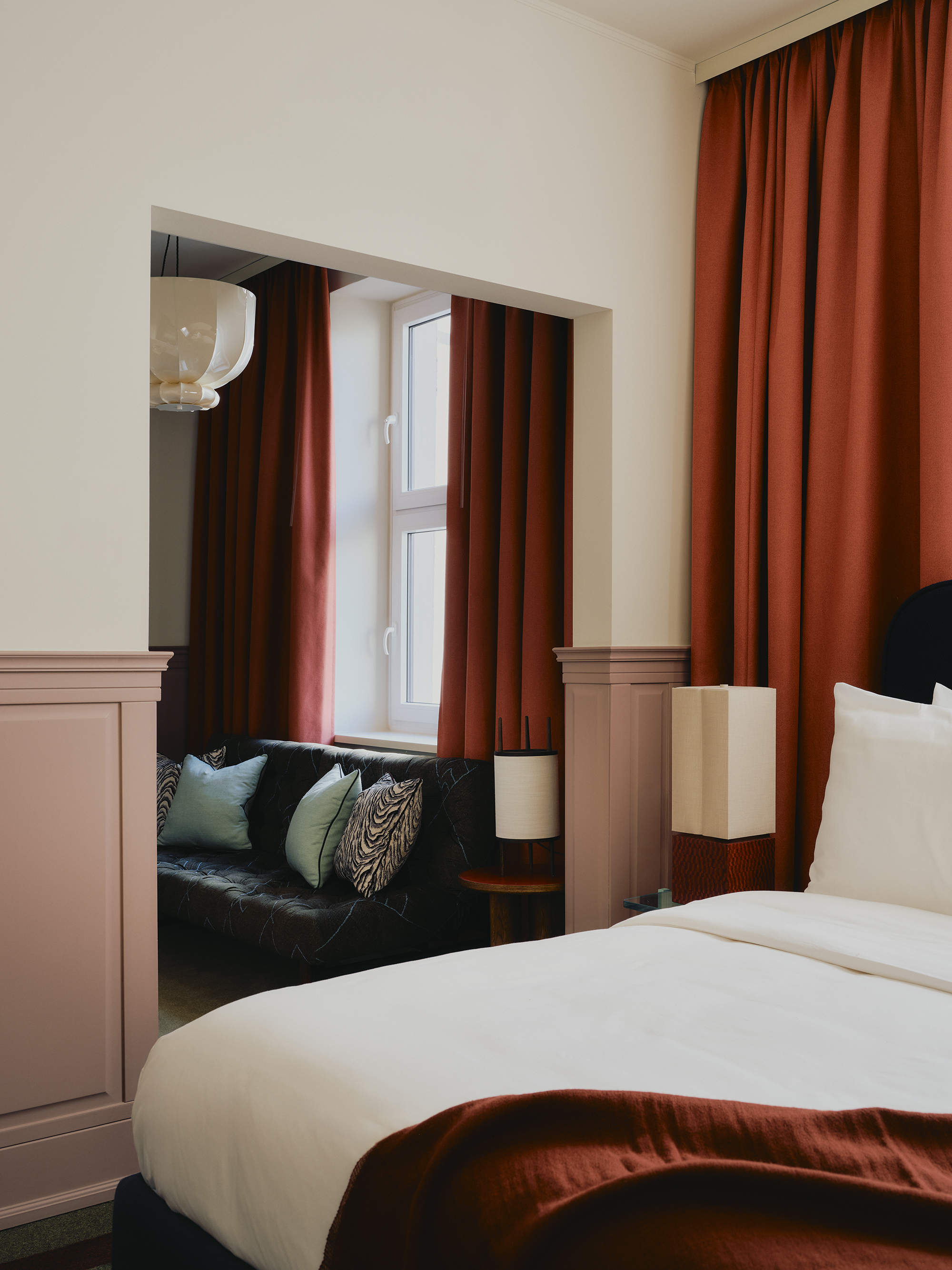
“Probably my favourite element of the hotel design are the light pendants in every room. The concept is all about embracing rawness and these strange dialogues with materiality, and so we wanted something that was quite soft to complement the angular features of the rooms themselves. Creating a lampshade in cotton or silk would have been too delicate, so we came up with this incredible design and found this fantastic fabric that looks like porcelain, but when you touch it, you realise it’s latex.”
Latex lampshades? It has to be Berlin.
Come see for yourself. Booking through our website will always get you the best rates. Use code DEANDIRECT when you book with us to get you up to 12% off your Berlin stay
Share this article
Last Updated: Feb 27, 2026